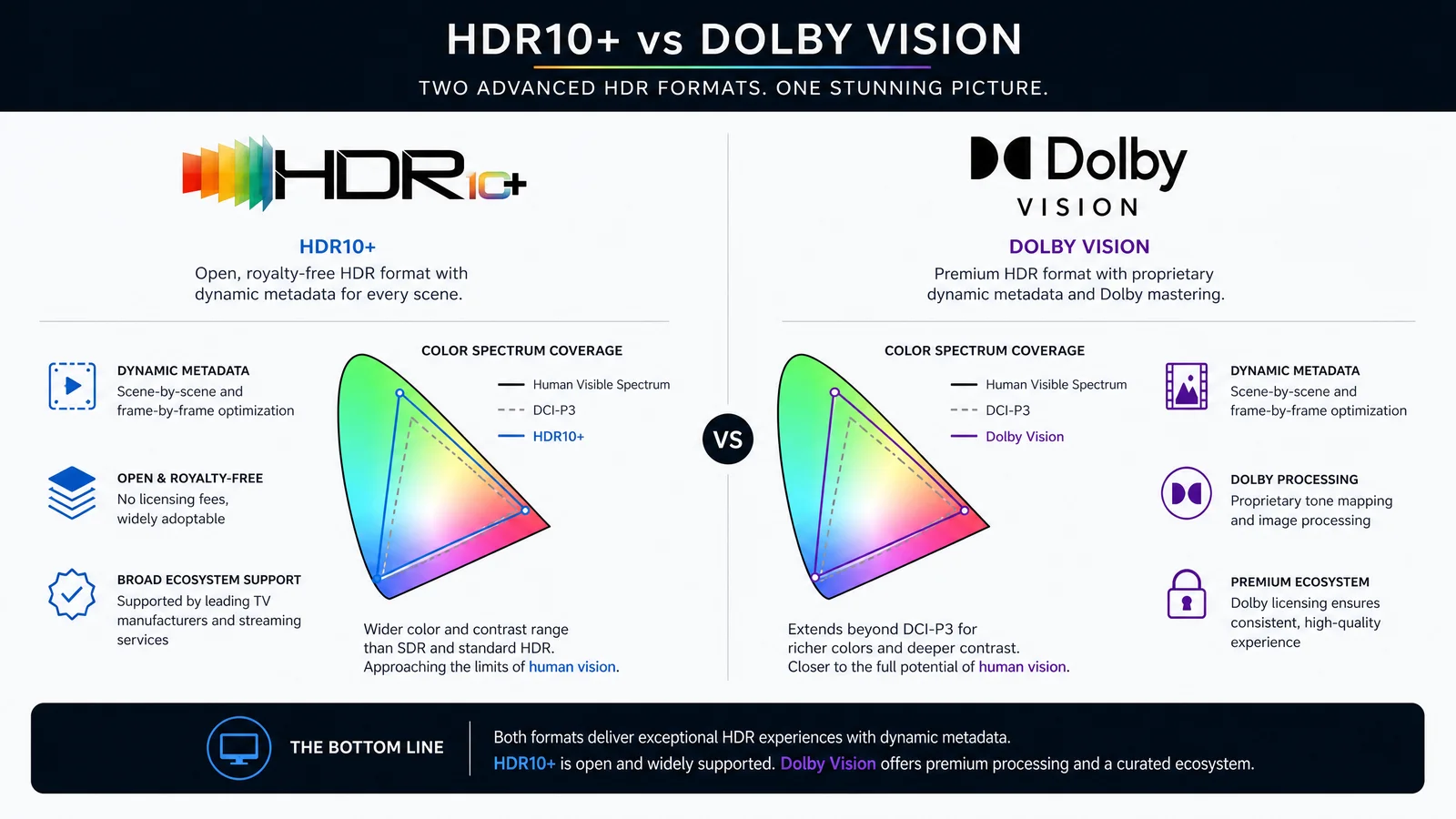
HDR10+ and Dolby Vision both use dynamic metadata to help a compatible TV map HDR content to its own brightness and contrast capabilities. The practical question is not which logo sounds more advanced; it is whether your TV, source device, streaming service, and chosen title support the same format.
Static HDR10 versus dynamic formats
HDR10 uses a baseline HDR workflow with static metadata for a program. HDR10+ and Dolby Vision can carry scene-level or frame-level instructions, allowing the display to adapt tone mapping as the content changes. That can help preserve highlight and shadow detail on displays that cannot reach the mastering level, but the final result still depends on the TV’s processing.
HDR10+
HDR10+ is designed as a royalty-free ecosystem with dynamic metadata. It appears on some televisions, streaming catalogs, and disc releases, but support varies by brand, app, model, and region. A TV that supports HDR10+ will still need a compatible source and title before the dynamic layer is used.
Dolby Vision
Dolby Vision is a licensed format with its own mastering and playback ecosystem. It is available on many streaming services and some physical releases, but not every TV or player supports it. Some devices fall back to HDR10 when Dolby Vision is unavailable, while others may show a different format depending on the app and settings.
What buyers should actually check
- Look up the exact TV model’s supported formats, not just the brand’s general platform.
- Confirm that the streaming app or disc you use offers the format in your region and subscription tier.
- Check whether the source device and HDMI path can pass the required signal.
- Compare real contrast, tone mapping, brightness, and calibration before paying extra for a logo.
Does dynamic metadata always look better?
No. It can provide useful scene-by-scene guidance, but implementation quality varies. A well-processed HDR10 image can look better than poorly mapped dynamic HDR on another TV. Room lighting, panel contrast, mastering quality, and viewing distance also influence what you see.
Practical verdict
Choose the format with the strongest support across the content and devices you already use. HDR10 compatibility is still important as a baseline. Dolby Vision may be attractive for a broad premium streaming ecosystem, while HDR10+ can be valuable when your TV and services support it. Do not buy a television solely because one dynamic format appears on the box.
Related Reading: Dolby Vision vs HDR10+: What Is the Difference?